Describe both mating parts
Provide controlled drawings, fit features and representative tolerance conditions. Identify variants and surfaces that must remain undamaged through gripping, location and pressing.
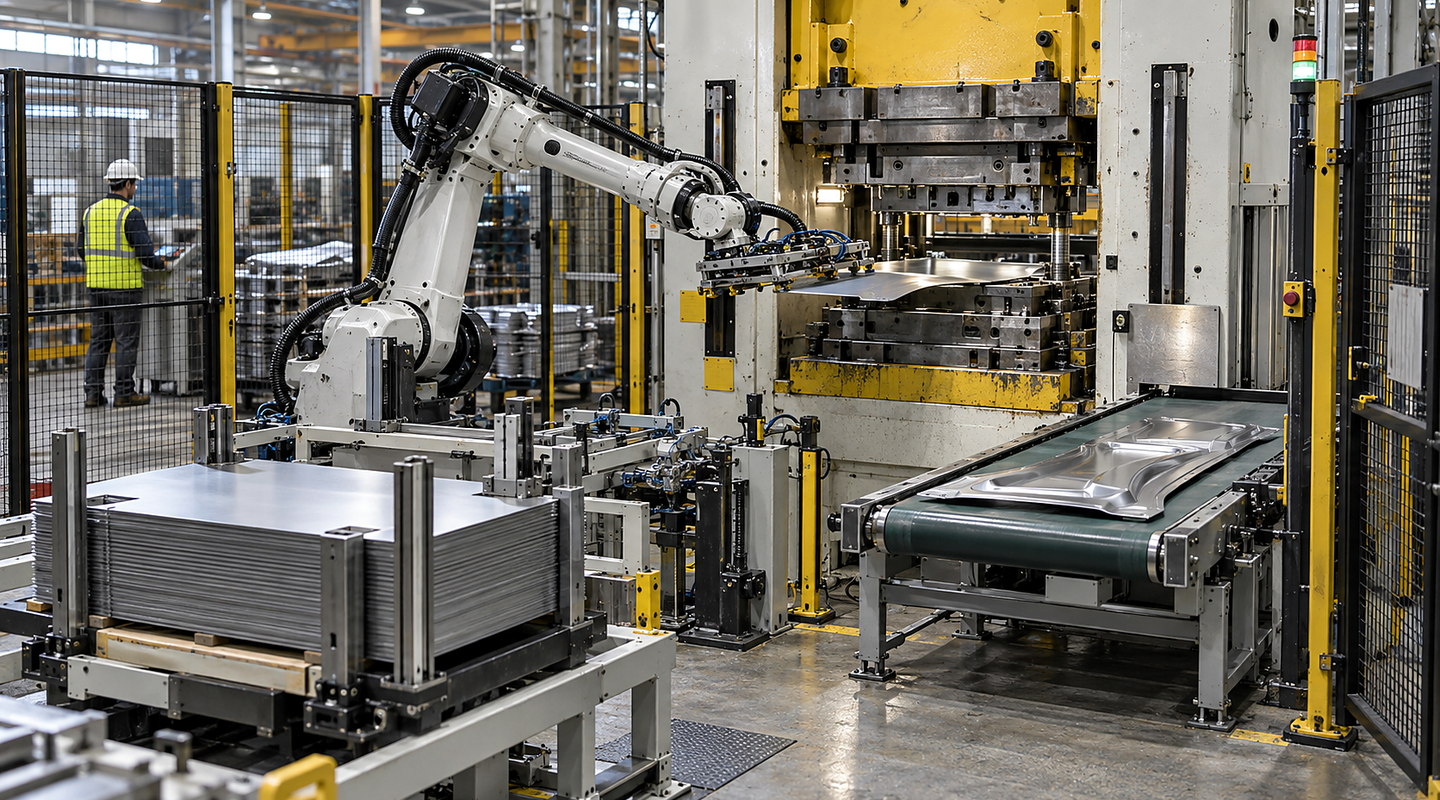
Define the press-fit operation and the variation your robotic cell must handle. Review part presentation, tooling and the required process checks, then focus trials on uncertain assembly steps before agreeing cycle, recovery and acceptance criteria.
Speak directly with Oxford Industrial Automation about force-controlled press-fit assembly.
Provide the mating-part drawings, fit requirements and approved process criteria. Define part location and support before specifying robotic loading and the pressing stage. Trial representative assemblies and agree the force-position or other monitoring evidence needed to identify incomplete, abnormal and accepted results.
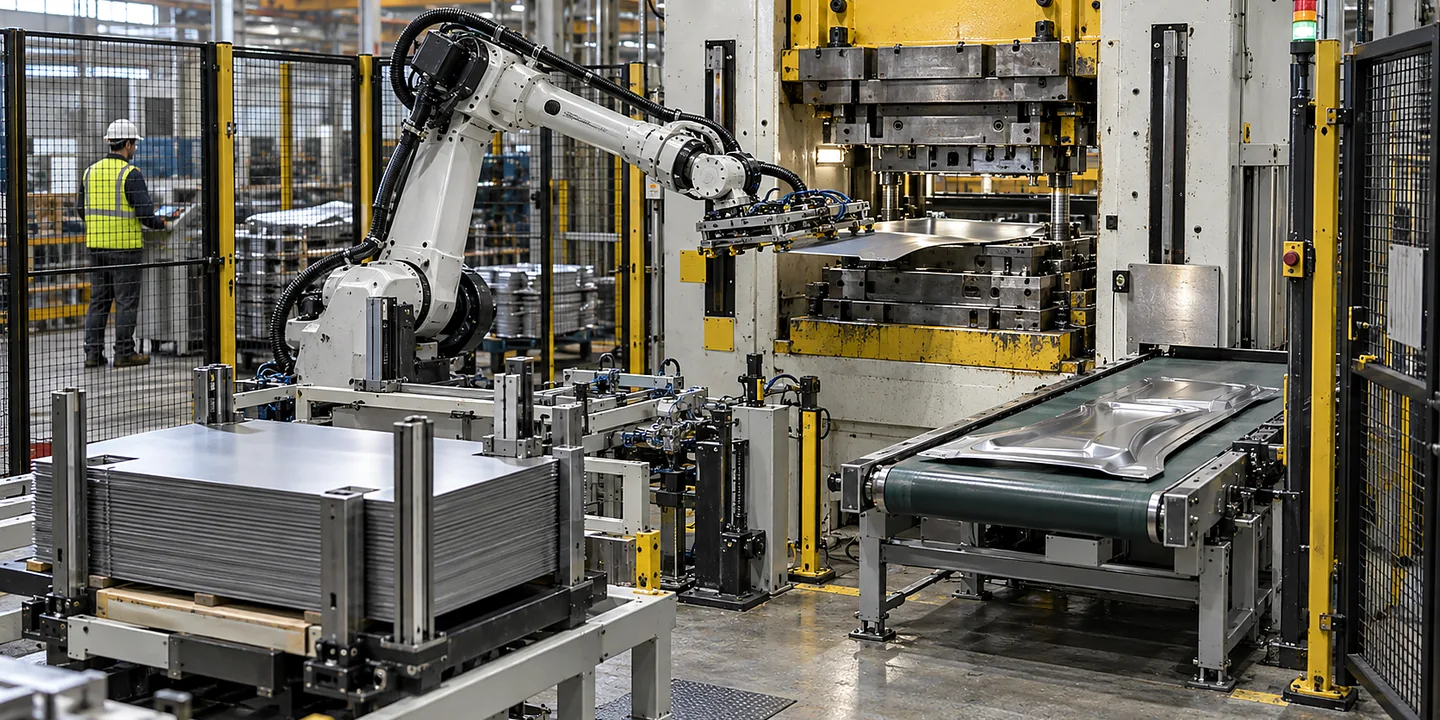
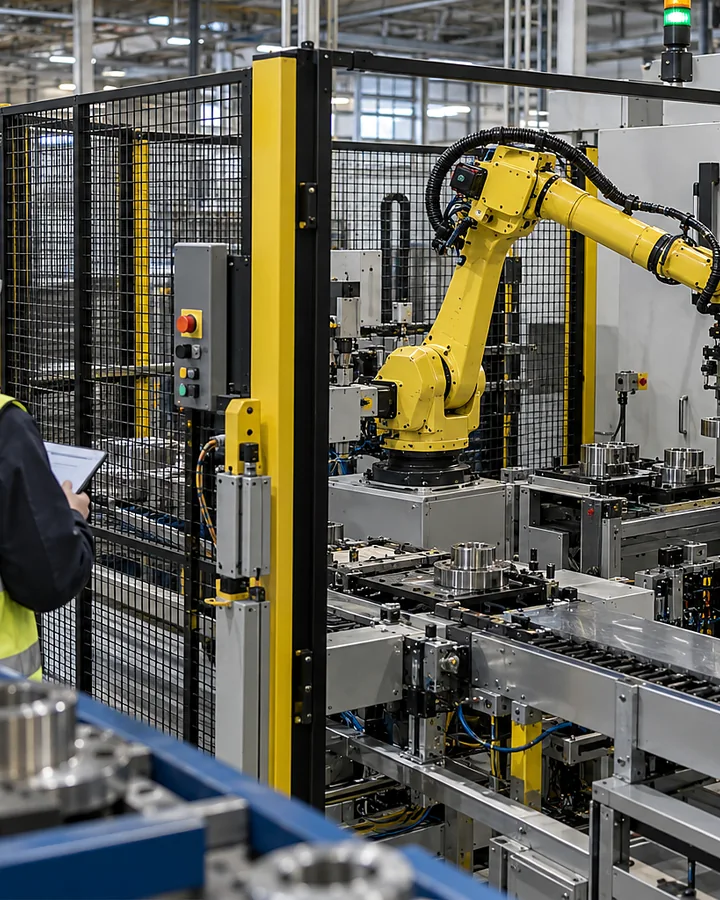

Robotic press-fit assembly combines part loading and location with a pressing operation. Define the fit and its acceptance evidence before assigning the handling and pressing duties.
Provide controlled drawings, fit features and representative tolerance conditions. Identify variants and surfaces that must remain undamaged through gripping, location and pressing.
Show the assembly datum and the support needed during insertion. The fixture and load path must be reviewed with the pressing operation rather than assuming the robot can compensate for any misalignment.
State whether the robot loads a separate press or is proposed to participate in the process motion. Confirm the capabilities and limitations of the complete arrangement with the equipment supplier.
Identify which force, position or other observations distinguish accepted and abnormal assemblies. Monitoring limits need representative process evidence and the responsible engineering team’s approval.
Define the response to a missing component, interrupted stroke or result outside the approved window. Keep the affected assembly identified and prevent it being released as an accepted part.
Budget part presentation, loading, location, pressing, checks, unloading and recovery. The robot movement time alone does not describe production output or required operator support.
The right choice changes with part, product and process variation for force-controlled press-fit assembly, arrival pattern and presentation, your line layout and required results.
Include the approved part range and agreed challenge cases. Record part identity, setup and observations for each assembly so the process result can be traced to the tested condition.
Do not assume an attractive force-position trace proves every product requirement. The responsible product team should define any dimensional, functional or other checks needed alongside the monitored process.
Agree what happens if loading, pressing or unloading stops midway. The restart sequence must establish the actual part and process state before allowing another operation.
Use the robotic press-fit assembly specification checklist to prepare the application, then agree the acceptance checks and production records before comparing proposals.
Your final solution for force-controlled press-fit assembly must reflect the law, current standards and site-specific risks that apply to your installation.
A force-position record is most useful when the datum, support and accepted assembly condition are defined. Plan the process monitoring with the component drawings and approved fitting method rather than treating a curve as an automatic pass certificate.
Define the reference position and how the parts are located before pressing. A shifted fixture or a part not seated in its nest can alter the apparent travel. Include confirmation of the starting condition so the monitoring result describes the intended assembly sequence.
Use the agreed good condition and credible abnormal conditions to assess the proposed criteria. Record the component variation represented. A narrow window drawn around one successful run may reject acceptable variation or fail to describe another genuine fault.
Reaching a final position and recording a trace are process events. State which additional dimensional, retention or functional checks establish the required product result. Where the trace is used as acceptance evidence, document the relationship being relied on and the limits of that conclusion.
Define the safe response when loading, pressing or data recording is interrupted. Preserve the identity and status of the affected assembly. Repeating a press operation should follow the approved process disposition rather than being an informal way of obtaining a passing trace after an unexplained failure.
Review robotic press-fit assembly requirements — explore the existing guidance